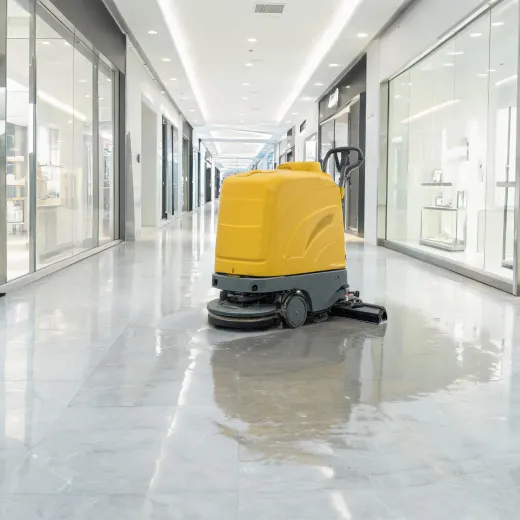
Kärcher ride-on floor scrubber cleaning a logistics facility
Application engineering for working facilities

Kärcher cleaning systems begin with the floor under operation

Define traffic, soil, surface, access, and available shift minutes before narrowing the equipment family. The result is a testable brief for scrubbers, sweepers, pressure washers, or industrial vacuums.

LogisticsRetailFood productionMunicipal
View Machine Systems
Grouped application record

Four evidence groups make specifications usable

A catalogue value becomes meaningful when it is linked to the route where the machine will work. Record the difficult points first, then compare current model documents.

Floor and soil condition
Surface recordCoating, texture, joints, slopes, drainage, and areas where pedestrians re-enter the route.
Soil recordSeparate loose debris, fine dust, oily film, tracked grit, and adhered residue before selecting brush, pad, chemistry, or pressure.
Machine envelope
Access recordMeasure the narrowest doorway, lift, turn, storage bay, and transport path in millimetres.
Route recordMap open passes, obstruction zones, refill points, dump travel, charging location, and the permitted cleaning window.
Verification condition
Controlled trialHold brush or pad, chemistry concentration, travel speed, and operator constant while comparing pickup and visible residue.
Acceptance recordPhotograph a fixed 1 m² check area before and after the pass, then record drying condition at 1, 3, and 5 minutes.
Machine families

Match cleaning motion to the contamination path

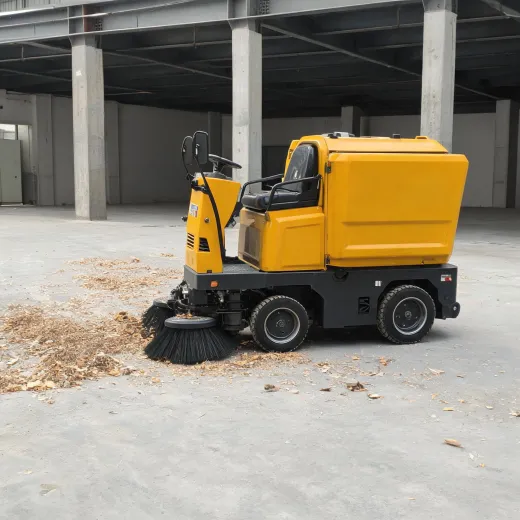
Each family handles a different combination of debris, liquid, pressure, recovery, and route geometry.

Resource control is an operating variable

Measure water, energy, chemistry, and recovery together

Lower solution flow can reduce refill travel, but it is useful only when soil removal and pickup remain acceptable. Record the entire route rather than presenting an isolated percentage.

01
Baseline the route
02
Hold test conditions
03
Compare recovery
04
Document limits
Selection questions

Questions that expose the important trade-offs

Scrubbing and recovery

No. Higher flow can improve wetting on some soils but increases refill volume and may extend drying time. Test chemistry, pad or brush, travel speed, flow, and squeegee condition as a controlled set.

Not when turns, doorways, shelving, or parked equipment interrupt the route. Useful output includes turning, refill, dumping, inspection, and end-of-shift cleaning time.

Pressure and extraction

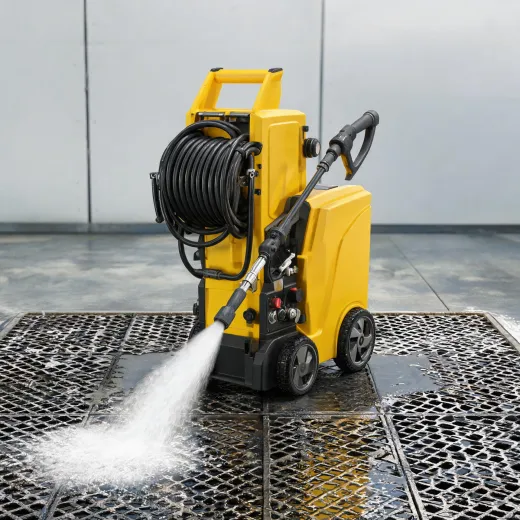
Pressure, flow, nozzle geometry, surface tolerance, runoff control, and duty cycle interact. A small test area protects coatings and shows whether the wash process is practical.

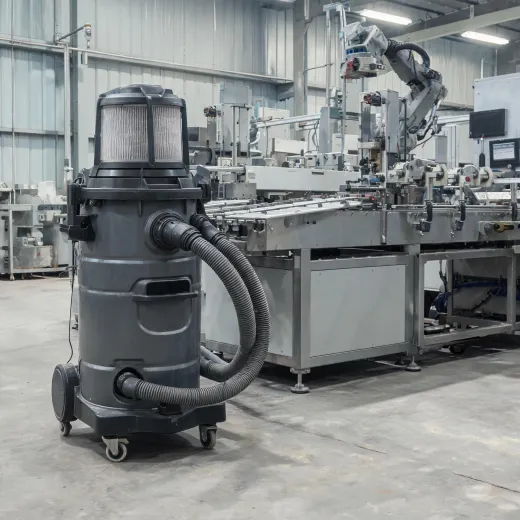
Material type, particle size, temperature, moisture, hose length, filter class, and disposal method must be reviewed. Combustible or hazardous dust requires a separate risk assessment and appropriately certified equipment.
Bring the route, not a guessed model

Turn measured conditions into a Kärcher demo plan

Share floor area, access constraints, soil, surface, utilities, and cleaning window. The next discussion can define the machine family and a reproducible acceptance check.